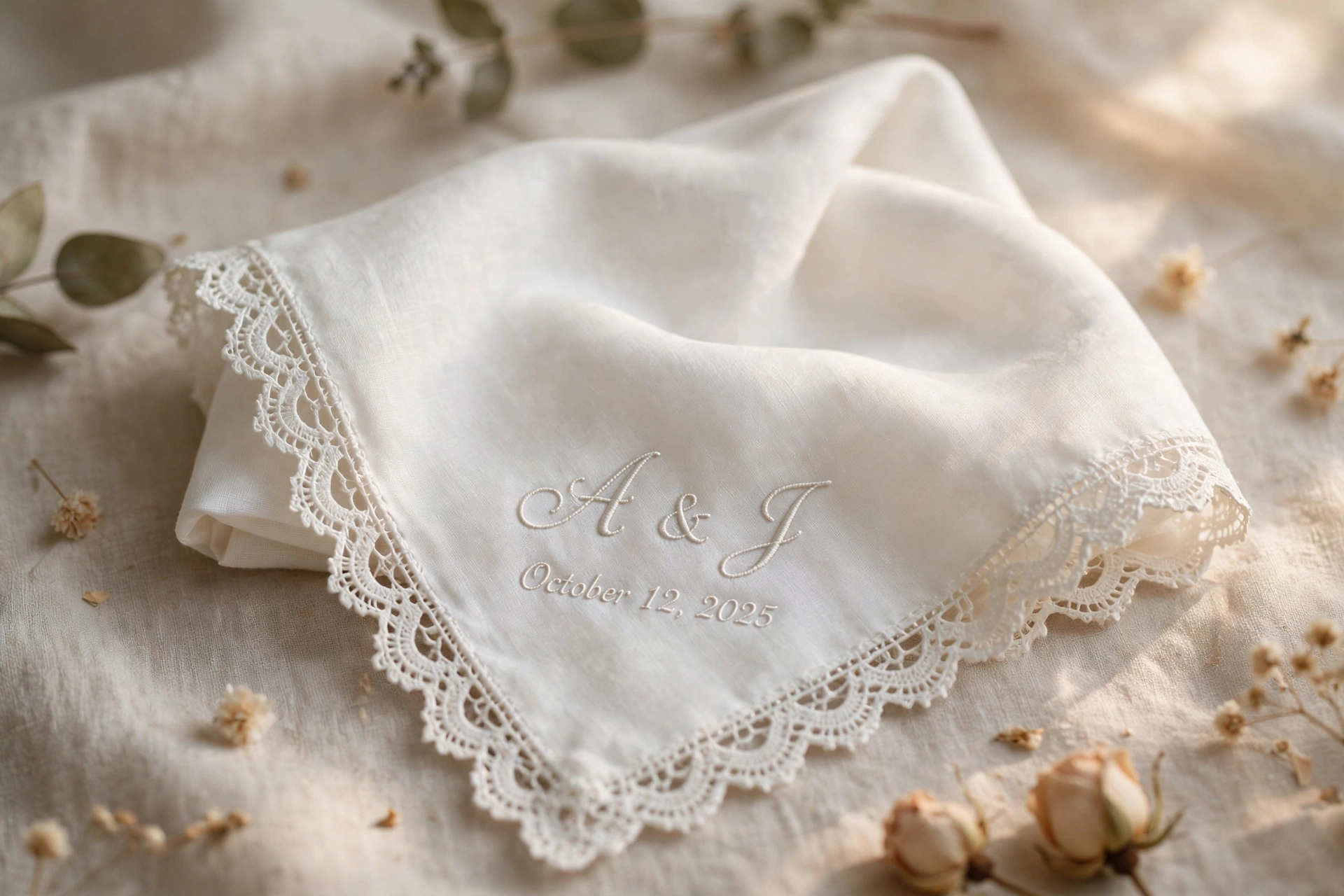
Wedding embroidery turns ordinary items into keepsakes people keep for decades. A handkerchief with a stitched message from a parent, robes with elegant monograms for the bridal party, a ring pillow carrying the couple’s date — these are the details guests remember and families treasure. This guide covers the most popular wedding embroidery items, how to handle delicate fabrics like satin and linen, the rules for small elegant text, monogram and date layouts, colour choices, and why the keepsake market keeps growing for embroiderers.
The Most Popular Wedding Embroidery Items
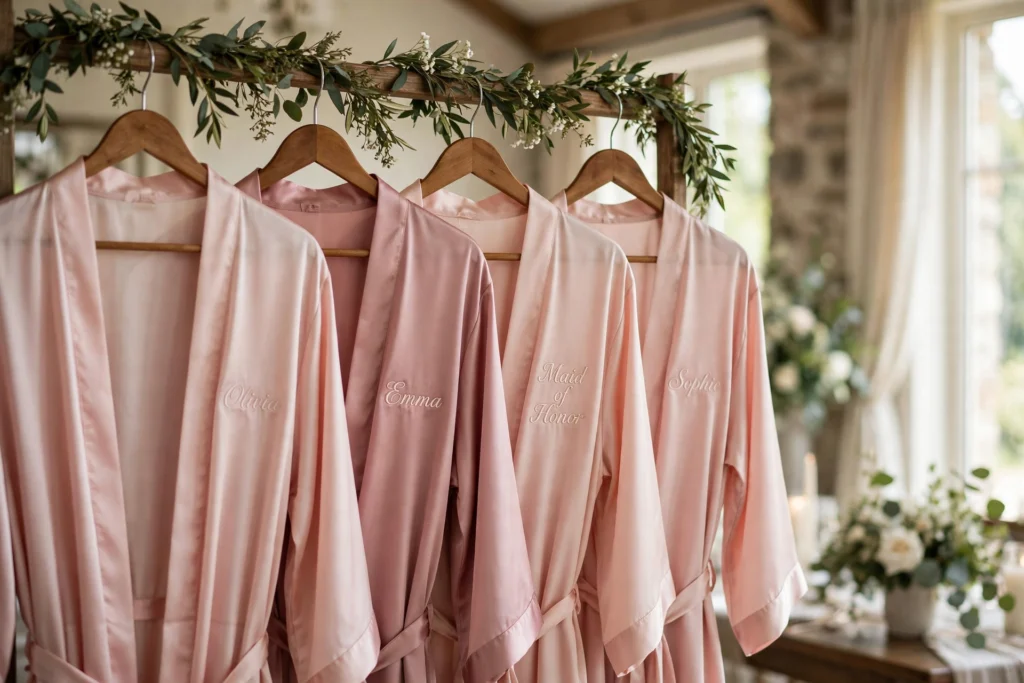
The proven sellers in wedding embroidery: handkerchiefs for the mother of the bride and groom (usually with a short heartfelt message and the wedding date), bridal party robes with names or monograms, ring pillows with initials and date, embroidered table runners and napkins for the head table, a stitched label inside the wedding dress (“something blue” labels are a beloved tradition), garter embroidery, flower girl dresses and sashes, and personalised gifts like embroidered towels, tote bags, and throw blankets for the couple. Each item has different fabric and sizing needs — which is where digitizing decisions start.
Delicate Fabrics: Satin, Linen, and Lace Need Gentle Files
Wedding fabrics are the opposite of denim. Satin puckers if you look at it wrong, linen shows every needle mark, and lace barely holds a stitch. Digitizing for these fabrics follows strict rules:
- Lower density. Lighten fills and satin significantly — delicate fabrics can’t carry heavy stitch counts without distorting.
- Gentle underlay. Minimal, soft underlay to avoid stiffness; a heavy file turns a flowing handkerchief into cardboard.
- Smaller designs. Wedding designs are usually small and refined — 2 to 4 inches — which suits the fabrics and the aesthetic.
- Stabiliser strategy. Water-soluble stabiliser is the wedding embroiderer’s friend: it supports the stitching, then dissolves completely, leaving no stiff backing on a keepsake item.
If you’re used to digitizing for workwear, wedding files are a different mindset: the lightest file that still looks rich wins.
Small Elegant Text: The Rules
Wedding embroidery lives on text — names, dates, short messages — and most of it is small. The rules for keeping it readable and beautiful:
- Minimum letter height around 0.25 inches (6–7 mm) for script fonts, slightly less for clean block fonts — below that, loops close up and words turn to squiggles. Our full guide to small text embroidery minimum sizes covers the limits in detail.
- Script fonts need stroke width. A beautiful thin script on screen may be too fine for thread. Digitizers thicken strokes slightly so letters survive sewing.
- Short messages sew best. A handkerchief line like “No ugly crying” or a parent’s few words, plus the date, beats a paragraph. Long text shrinks to fit and loses readability.
- Test-sew text on scrap of the same fabric before touching the real keepsake. Wedding items are one-of-one — there is no second handkerchief.
Monograms and Date Layouts That Always Work
The classic wedding monogram follows tradition: the bride’s initial first, the couple’s shared surname initial larger in the centre, and the groom’s initial last. For modern couples, simple two-initial layouts with an ampersand or a small heart are equally popular. Date formats range from full (“June 14, 2026”) to compact numerals (“06.14.2026”) to Roman numerals for a formal look.
Layout patterns that consistently look right: monogram centred with the date curved beneath it; initials inside a simple wreath or laurel; name and date stacked in two lines of script and block font mixed — script for names, small caps block for the date gives lovely contrast. Keep ornamentation minimal: a tiny sprig, two leaves, one heart. Wedding design is restraint.
Colour Choices for Wedding Embroidery
Colour carries the theme. The timeless options: ivory or champagne thread on white fabric (tone-on-tone elegance), dusty blue (doubles as “something blue”), sage and eucalyptus greens for garden weddings, blush and dusty rose, and metallic gold or silver for formal celebrations — metallic thread needs slower machine speed and a suitable needle, and its digitizing should avoid tiny dense details where metallic thread struggles. Matching the wedding’s palette exactly is where custom digitizing beats stock designs: the same monogram file can sew in any colour, but a digitizer can also adjust design elements (adding a sprig in the accent colour, for example) to tie pieces together.
Wedding Items Beyond the Day: Towels, Robes, and Home Keepsakes
The couple’s own keepsakes extend the range: embroidered bath towel sets with monograms are a classic wedding gift — and towels need their own digitizing approach with knockdown stitches, explained in our towel embroidery digitizing guide. Anniversary embroidery (first anniversary is traditionally paper, but embroidered gifts mark every year), Christmas ornaments with the wedding date, and framed hoop art of the couple’s vows or song lyric all keep wedding customers coming back long after the event.
The Keepsake Market: Why Embroiderers Love Weddings
Wedding work is premium work. Customers aren’t price-shopping a handkerchief — they’re buying the emotion stitched into it, and they pay for quality, presentation, and reliability. Deadlines are absolute (the wedding date doesn’t move), which rewards dependable digitizing turnaround. Word of mouth is powerful: one bridal party robe set puts your work in front of a dozen future brides. For embroidery businesses, a small wedding collection — handkerchief designs, monogram layouts, robe names — digitised once and reused with name/date swaps is one of the best investments in the niche.
Frequently Asked Questions About Wedding Embroidery
What is the most popular wedding embroidery item?
Embroidered handkerchiefs for parents of the bride and groom are the classic bestseller, followed by bridal party robes and ring pillows. All carry names, monograms, or the wedding date.
How small can wedding script text be?
Keep script letters at about 0.25 inches (6–7 mm) tall minimum, with strokes thickened slightly for thread. Shorter messages at readable sizes always look better than long messages shrunk small.
Can you embroider on satin and lace?
Yes, with a digitised file built for delicate fabric: lighter density, gentle underlay, and water-soluble stabiliser that dissolves away afterward. Standard-density files will pucker satin.
What colours work best for wedding embroidery?
Tone-on-tone ivory, dusty blue, sage, blush, and metallic gold or silver are the timeless choices. Match the wedding palette for a custom feel.
How far ahead should wedding embroidery be ordered?
Order digitizing and sewing well before the date — keepsakes are one-of-one items with no room for last-minute problems. Digitizing itself takes 4 to 12 hours, but allow days for test sew-outs and production.
Get Your Wedding Designs Digitized From $10
Delicate fabrics and one-of-a-kind keepsakes deserve files built with a light, expert hand. Order our embroidery digitizing service from just $10 at ndigitizing.com. Every design is 100% manually digitized for your fabric, delivered within 4 to 12 hours, with free revisions until it sews perfectly.