
Christmas Embroidery Designs: Stockings, Gifts & Holiday Decor
Christmas is the biggest personalization season in embroidery — and it runs on deadlines. A name on a stocking cuff, a set of holiday towels, a table runner for the family dinner: these are the gifts people keep for decades, and every one of them needs a digitized file before it can sew. Whether you embroider for customers or for your own family, the designs that sell and stitch best share the same traits: bold shapes, limited colors, and files planned early.
This guide walks through the most popular Christmas embroidery projects, digitizing tips for each, and how to plan around the seasonal rush so your orders land before the holiday, not after it.
Personalized Stocking Cuffs: The Classic
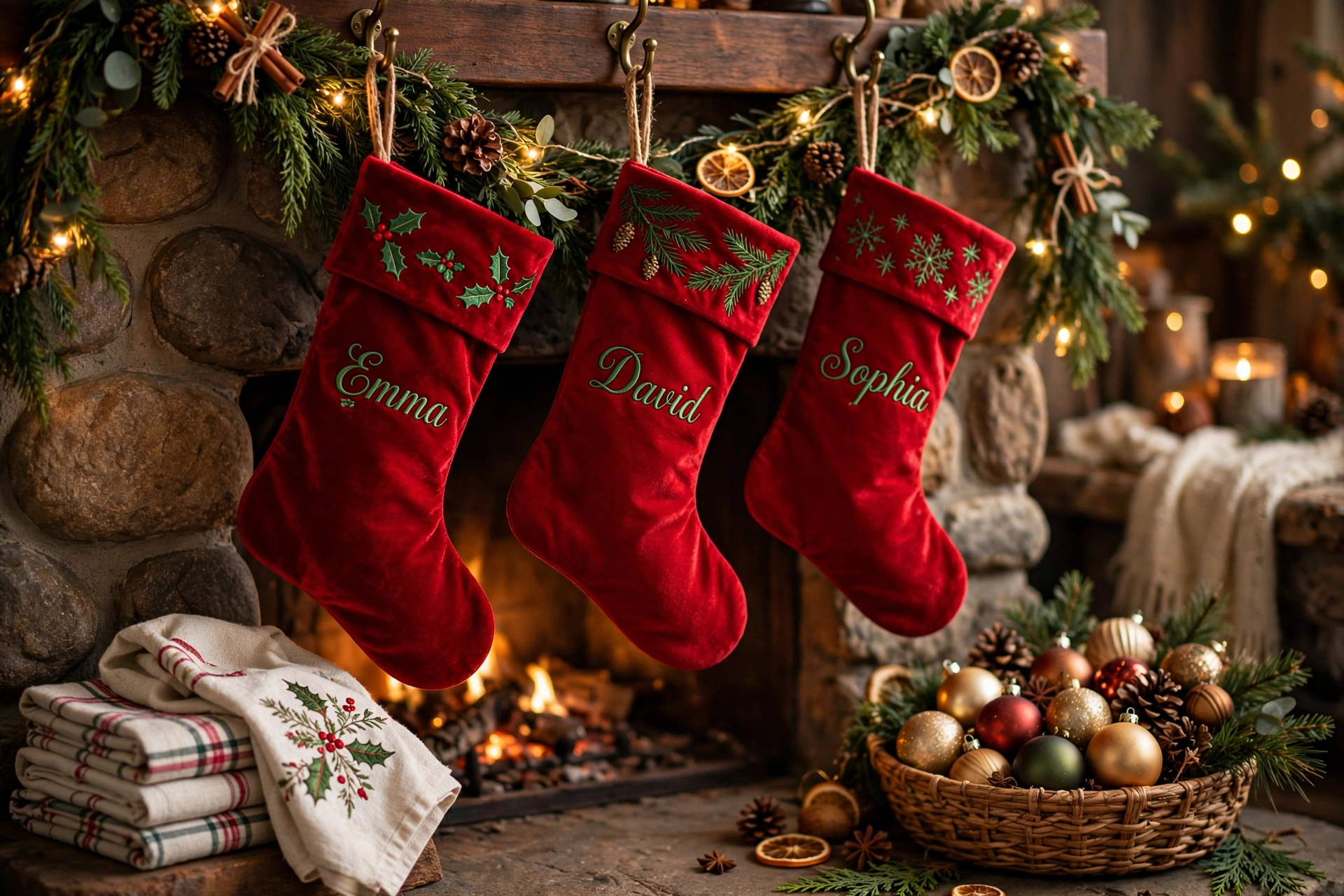
The embroidered Christmas stocking is the single most traditional holiday project. The name goes on the cuff — usually a folded band of velvet, faux fur, or contrasting fabric at the top of the stocking.
- Name size: letters typically 0.75 to 1.25 inches tall on a standard cuff, in a script or classic serif font.
- Digitizing note: script fonts need care at joins — letters must connect cleanly without thread build-up. Tell your digitizer it is a cuff name so the file is sized and spaced for the band, not a flat chest.
- Fabric matters: velvet and faux fur swallow stitches like terry cloth does. A knockdown-style underlay and topping keep names readable on a plush cuff.
- The market: families order matching stockings for new babies, new spouses, and new pets every year. A shop that nails stocking names in November has repeat customers for life.
Holiday Towels and Kitchen Linens
Holiday towels are the fastest-selling embroidered gift in December — guest towels, hand towels, and kitchen towels with a seasonal motif and a name or year.
Popular designs: a simple wreath, a snowman face, “Merry Christmas” in script with a small holly accent, or a monogram framed by a holiday border. Keep the motif bold — terry cloth eats fine detail. Our guide to towel embroidery digitizing covers the knockdown stitch and topping technique that makes towel designs sit on top of the loops instead of sinking in.
Towel sets also make ideal corporate and teacher gifts, which means bulk orders — another reason to have the files digitized and test-sewn before the December rush hits.
FSL Ornaments and Freestanding Pieces
Freestanding lace (FSL) ornaments — snowflakes, angels, stars, and bells stitched entirely in thread on water-soluble stabilizer — are a beloved holiday category. If you offer ornaments, cross-reference your FSL designs with your flat designs: the same snowflake artwork can appear as a lace ornament, a towel motif, and a stocking accent, giving you a coordinated product line from shared artwork.
One caution: FSL digitizing is a specialty of its own — the file must hold together with no fabric underneath, so it cannot be made by simply sewing a normal design on stabilizer. Order FSL files from a digitizer who builds them as true freestanding lace, and always test-sew one before committing to a batch.
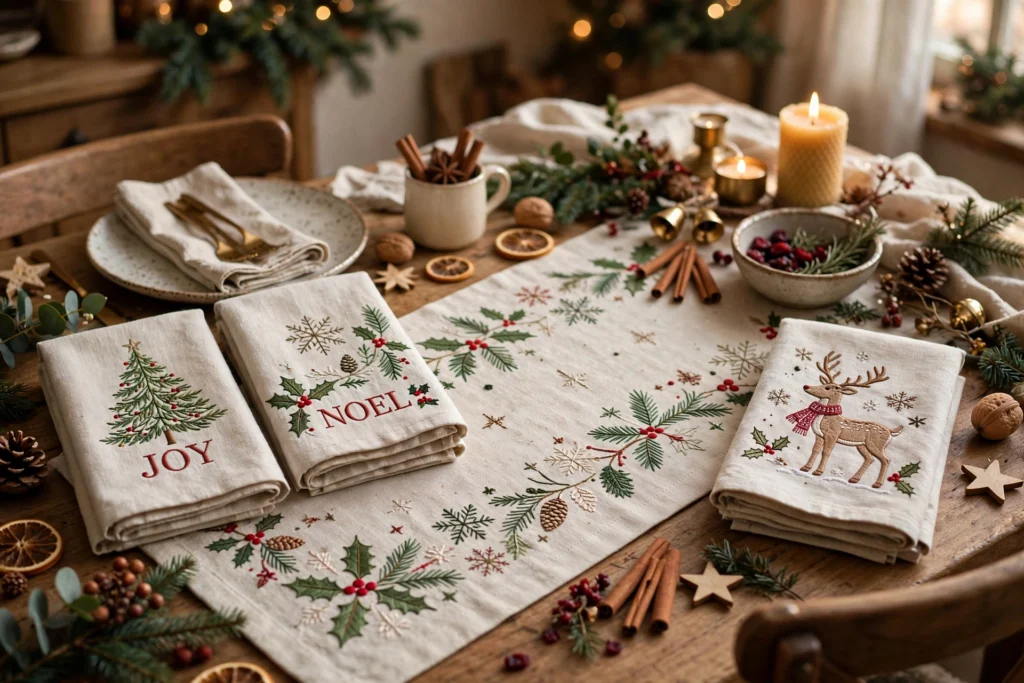
Table Runners, Napkins, and Holiday Decor
The Christmas table is prime embroidery territory:
- Table runners: a motif repeated at each end — poinsettia, holly sprig, or a monogram — sized 4 to 6 inches. Runners are flat and stable, so detail survives better than on towels.
- Napkins: small corner motifs, 1.5 to 2.5 inches. A matching set of 8 to 12 napkins is a high-value gift order; digitize the motif once and sew it all season.
- Tree skirts: large designs near the outer edge, or a family name and year at the front opening. Thick fabrics need heavier stabilizer and bolder artwork.
- Pillows and wall hangings: seasonal sayings and scenes, often the most detailed holiday pieces — schedule these early, they take the longest at the machine.
Linen and cotton decor fabrics are far more forgiving than fleece or terry, so holiday decor is where your most detailed designs belong.
Seasonal Rush Planning: Order Digitizing Early
Every November, the same thing happens: shops get slammed, customers order late, and digitizing becomes the bottleneck. A realistic plan:
- October: finalize your design lineup and get files digitized now, while turnaround is relaxed. Test-sew every design on the actual blank.
- Early November: open orders with a clear cut-off date for guaranteed Christmas delivery.
- December: sew, sew, sew. If you are still ordering digitizing in mid-December, you are paying rush prices and risking late gifts.
A digitizing file is ready in 4 to 12 hours from a good service, but your machine time is not unlimited — the file queue is the part you can eliminate early. If you have never ordered online before, our step-by-step guide to ordering embroidery digitizing online walks through exactly how it works.
The Gift Personalization Market
Personalization is why embroidery beats printed gifts in December. A printed stocking is a product; an embroidered name makes it an heirloom. The strongest sellers are names on stockings, monograms on towels and robes, “Baby’s First Christmas” onesies and bibs, pet stockings with a paw print and name, and family-name table linens.
For sellers, the math is friendly: the digitizing file is a one-time cost starting from $10, and that single name-style or motif file personalizes dozens of gifts all season. Price the personalization, not just the blank — customers happily pay for the name.
Frequently Asked Questions About Christmas Embroidery Designs
What size should a name be on a stocking cuff?
Letters usually run 0.75 to 1.25 inches tall, sized to fit the cuff band with margin on both sides. Script and classic serif fonts are the traditional choices.
When should I order digitizing for Christmas designs?
October is ideal, early November at the latest. Getting files digitized and test-sewn before the rush means December is spent sewing and selling, not waiting on files.
Can the same design be used on towels, stockings, and decor?
The artwork can, but the file often cannot. Terry cloth, velvet cuffs, and flat linen each need different densities and underlay. A good digitizer adjusts the file per fabric — ask for the versions you need.
What are FSL ornaments?
Freestanding lace ornaments are stitched entirely in thread on water-soluble stabilizer, with no fabric underneath. They need specially digitized files that hold together on their own — a regular design sewn on stabilizer will fall apart.
What Christmas embroidery sells best?
Personalized stocking names are the perennial number one, followed by holiday towel sets, monogrammed linens, and baby’s-first-Christmas items. Personalization is what customers pay a premium for.
Get Your Holiday Designs Digitized Before the Rush
Every Christmas bestseller starts with a clean file — names that read on a velvet cuff, motifs that sit proud on terry loops, decor designs sized right the first time. Order our embroidery digitizing service from just $10 at ndigitizing.com. Every design is 100% manually digitized, delivered within 4 to 12 hours, with free revisions until it sews perfectly — order early and spend December sewing, not waiting.