Corporate Logo Embroidery: Branding Polos, Shirts & Gifts
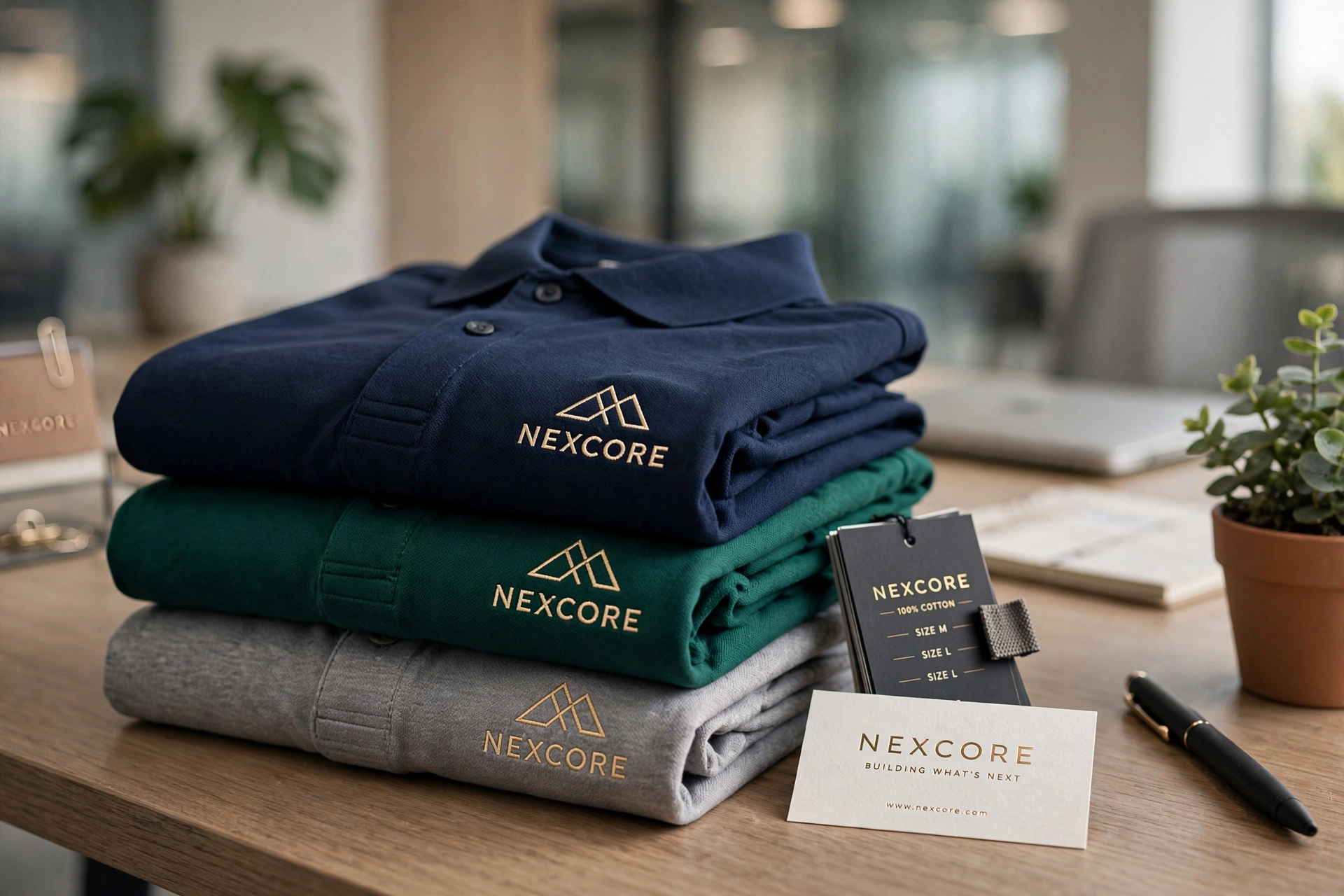
Corporate embroidery has one rule that matters more than any other: the logo on shirt number one and shirt number five hundred must look exactly the same. Same size, same colors, same placement — whether the order is ten polos for a sales team or uniforms for locations in four cities. That consistency is not an embroidery skill. It is a digitizing and standards discipline, and it is what separates a professional corporate program from a box of almost-matching shirts.
This guide covers building a master logo file, matching thread colors to brand colors, placement on polos and dress shirts, embroidered corporate gifts, and keeping multi-location orders consistent.
One Master File: The Foundation of Corporate Consistency
Every corporate embroidery program should start with a single master digitized file of the company logo, created at the standard size and approved from a sewn sample. That file becomes the reference for everything:
- One approved version — the logo is digitized once, carefully, and that file (not the last order’s copy of a copy) is used for every run
- Defined sizes — a standard left-chest size, a smaller version for dress shirts or women’s cuts if needed, and a large version for jacket backs or bags, each digitized separately rather than stretched
- A written standard — size, placement measurements, thread colors, and approved garment types recorded in one document any embroiderer can follow
Resizing an embroidery file is not like resizing an image. A file digitized at 4 inches and shrunk to 2.5 keeps the same stitch counts crammed into less space — it sews dense, lumpy, and wrong. Each size gets its own digitizing pass. If your current logo file was never built this way, start by reading how the process works in our logo digitizing guide.
Matching Thread Colors to Brand Colors
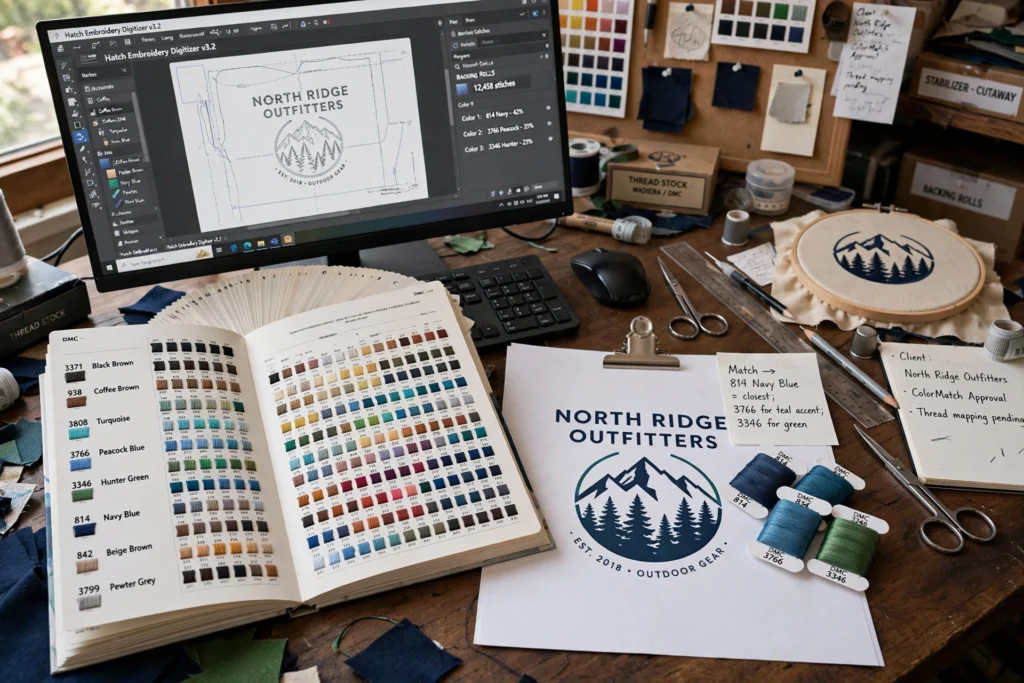
Companies arrive with brand colors specified in Pantone, HEX, or CMYK values. Thread does not work in any of those systems — every thread brand (Madeira, Isacord, Coats, and others) has its own numbered color range, and the match is a selection process, not a conversion:
- Start from the closest thread shades — the digitizer or embroiderer picks two or three candidate threads nearest the brand color
- Compare in daylight, on fabric — thread on a cone looks different from thread sewn on a navy polo; judge the sewn sample, not the chart
- Accept the physical limit honestly — thread ranges are wide but finite; most brand colors land very close, some land “nearest available.” The approved sewn sample is the decision, and once approved, those thread numbers go into the standard document forever
Record thread brand and number, not just “company blue.” If the embroiderer changes thread brands, the match must be re-approved, because the same color name in another brand is a different color.
Placement: Polos vs Dress Shirts
The left chest is the corporate default, but the details differ by garment:
- Polos: logo centered on the left chest, typically 3.5″ to 4″ wide for a standard logo. The placket and pocket (if any) set the vertical position — the logo sits level, measured from the shoulder seam, not eyeballed against buttons.
- Dress shirts: slightly smaller and more refined — around 3″ to 3.5″ wide — and placed above the pocket or on the pocket itself on shirts that have one. Fine logos with small text sometimes get a simplified dress-shirt version so lettering stays crisp.
- Sleeve embroidery: a secondary mark — a small logo, a website, or a department name on the sleeve adds branding without cluttering the chest. Works well for service teams photographed from the side.
- Right chest: reserved for the employee’s name, a title, or a location — chest balance matters; a name at the same size and weight as the logo looks deliberate, a mismatched one looks like an accident.
Full placement measurements for chest logos are covered in our left chest logo placement guide.
Corporate Gifts and Event Branding
Embroidered gifts carry a brand further than almost any other merchandise because people actually keep and use them:
- Caps — the event and golf-day staple; remember caps need a dedicated cap file (digitized for the curved front and center seam), not the flat chest file
- Bags and laptop sleeves — a tone-on-tone logo (thread close to the fabric color) looks premium and sidesteps color-matching arguments entirely
- Towels — spa, gym, and hospitality gifts; bold, simple logo versions sew best on terry cloth, with a knockdown stitch so the design sits on top of the pile
- Blankets and robes — larger, softer branding for executive gifts; monogram-style initials alongside the logo are a classic combination
For events, plan the digitizing early. A conference order of 300 caps with a new event logo is simple embroidery but needs the file built, approved, and sewn before a fixed date — the deadline does not move because the file was late.
Franchises and Multi-Location Orders
Consistency gets hard when five locations order from three different local embroiderers. Colors drift, sizes drift, and the brand quietly frays. The fix is central control of the assets:
- Head office owns the master files and issues them to whichever embroiderer produces each order
- The standard document travels with the files — sizes, placements, thread numbers, garment specs
- Local personalization stays local — names and titles can be added by the local shop using the specified font and size, so a name in Texas matches a name in Florida
This is also where outsourcing digitizing to one service pays off: one digitizer builds every location’s files to the same standard, instead of each shop interpreting the logo artwork their own way.
What Corporate Digitizing Costs
Corporate logos digitize at standard rates — from $10 for a standard chest logo, with larger or more complex designs priced by size and detail. The real saving is structural: pay for proper digitizing once per size, approve it once, and every reorder for years runs from the same master files with no setup surprises. Turnaround of 4 to 12 hours means a new location’s uniforms are never held up waiting for files, and free revisions cover the inevitable moment marketing updates the logo and the master file needs rebuilding to match.
Frequently Asked Questions About Corporate Embroidery
Why does my company logo look different between orders?
Usually because different files, sizes, or thread brands were used across orders. One master digitized file per size, fixed thread numbers, and a written placement standard make every order match.
Can thread colors match our Pantone brand colors exactly?
Very closely, in most cases. Thread ranges don’t contain every Pantone shade, so the process is choosing the nearest thread and approving a sewn sample. Once approved, that thread number becomes your standard.
What size should a logo be on a polo shirt?
Typically 3.5 to 4 inches wide on the left chest. Dress shirts usually run slightly smaller, 3 to 3.5 inches. Logos with fine detail sometimes need a simplified version at shirt sizes.
Can the same logo file be used on caps and shirts?
No — caps need a file digitized specifically for the cap’s curved surface and center seam (sewn center-out). Shirts use the flat chest file. One artwork, two different stitch files.
How do franchises keep embroidery consistent across locations?
Central ownership of master files plus a written standard (sizes, placements, thread numbers) that every producing shop follows. Personalization like names is added locally to the same spec.
Set Up Your Corporate Logo Files From $10
Consistent branding starts with one properly built master file — correct colors, correct sizes, sewn samples approved. Order our embroidery digitizing service from just $10 at ndigitizing.com. Every file is 100% manually digitized, delivered within 4 to 12 hours, with free revisions until your logo sews exactly the way your brand demands.