Custom Name Patches: Sizes, Fonts, Borders & Ordering Guide
Name patches are the unsung workhorses of embroidery — the mechanic’s shirt, the delivery driver’s jacket, the military-style name tape, the chef’s coat, the security uniform. They look simple: a name, a rectangle, a border. But a name patch that reads clearly across a room and survives industrial washing is a small design job with real rules — the right size, a font that stays legible at half an inch tall, clean borders, and a backing that matches how the patch will be attached. This guide covers standard sizes, font choices, border styles, backing options, and how to order custom name patches that come out right the first time — including bulk name lists for whole teams.
Standard Name Patch Sizes
Name patches follow fairly standard dimensions, driven by where they sit:
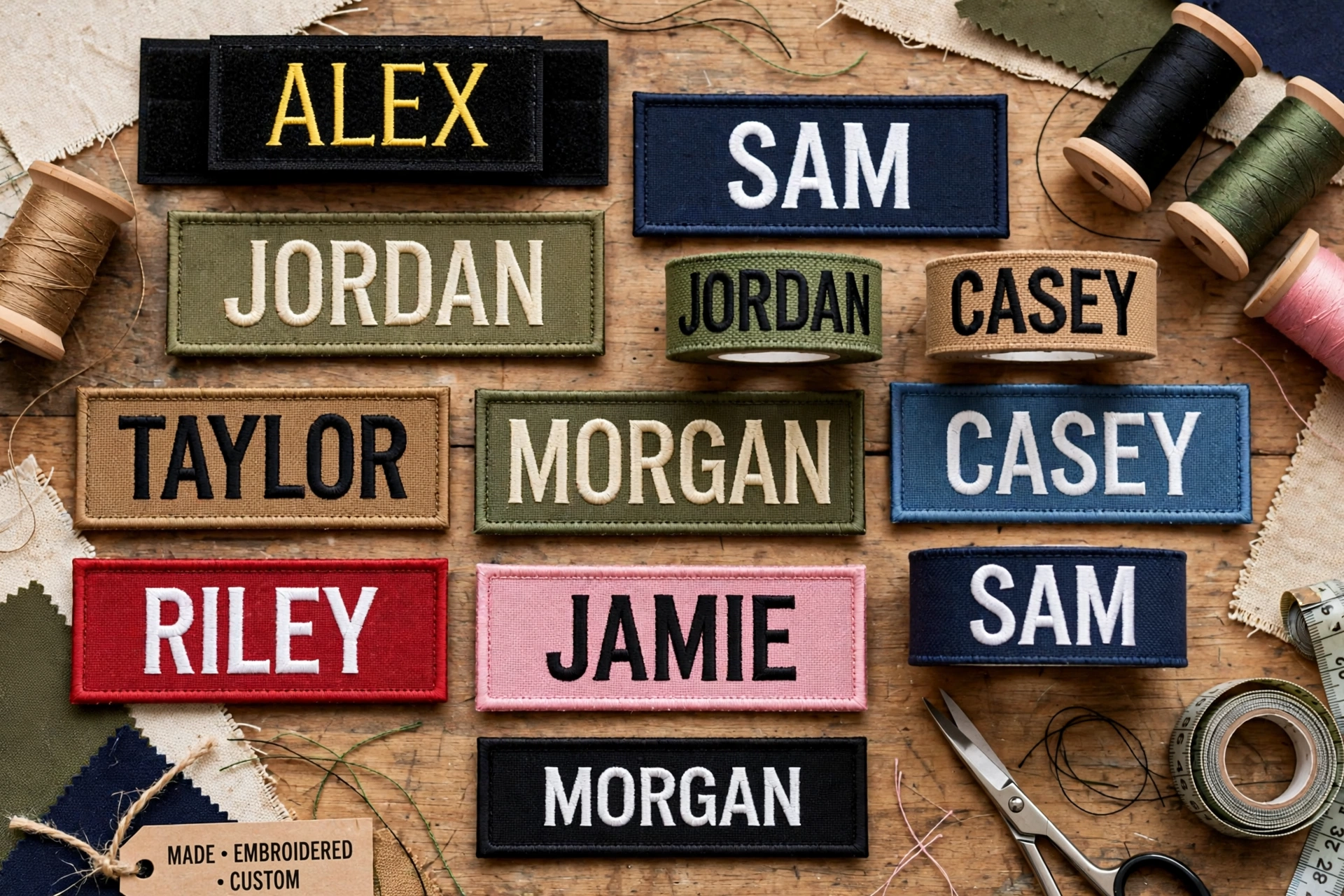
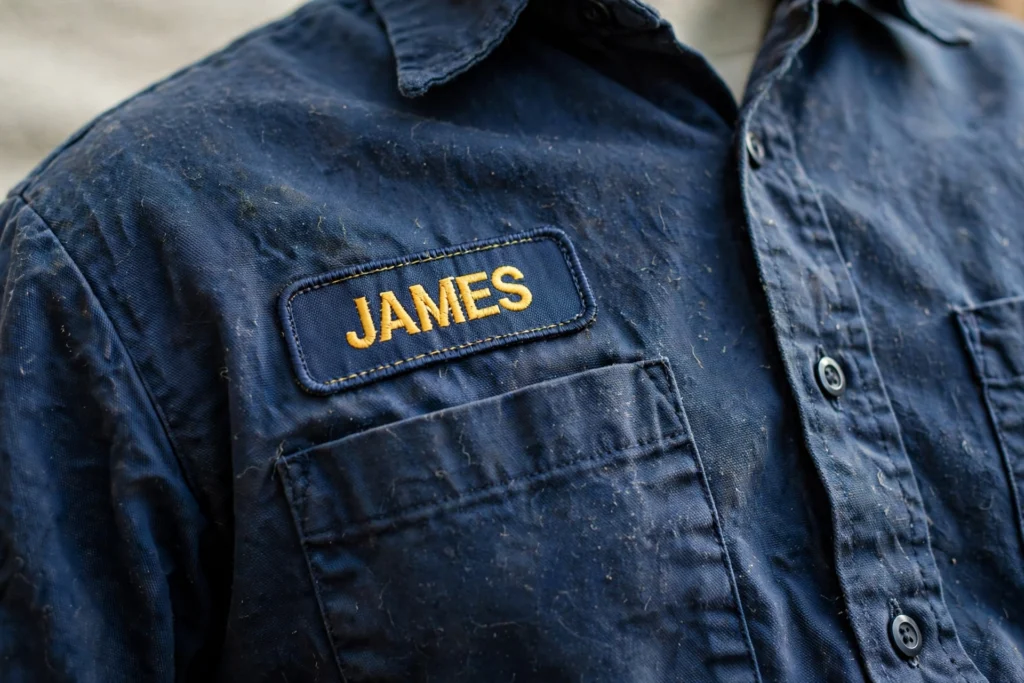
- Classic work shirt name tape: 4″ wide x 1″ tall — the most common uniform size, fits one line of text up to roughly 10–12 characters in a bold font
- Two-line patches: 4″ x 1.5″ or 4.5″ x 1.75″ — name on the first line, title or department smaller on the second
- Jacket name patches: 4.5″–5″ wide x 1″–1.25″ tall for larger lettering
- Military-style tapes: usually 5″ x 1″ worn on uniforms and gear
- Small retail/service tags: 3″ x 0.75″ for short names on light uniforms
The math that matters: letter height. On a 1-inch patch, capital letters usually finish around 0.5″–0.6″ tall after the border and padding take their share. That is plenty for a bold block font — and too small for fine, thin lettering. If a name is long (12+ characters), go wider rather than shrinking the letters into mush. For general patch dimensions beyond name tapes, our custom embroidered patches sizing guide covers shapes, borders, and backings in full.
Fonts That Stay Readable at Small Sizes
A name patch has one job: be read. Font choice decides whether it succeeds.
- Bold block fonts (think varsity and classic sans styles) are the safest choice — thick strokes, open letter shapes, readable at 0.5″ and from a distance
- Standard sans-serifs work well at 0.6″ and above and give a clean corporate look
- Slab and typewriter styles suit workwear and military looks and hold up well at small sizes
- Script fonts are the risky ones — thin connecting strokes disappear at name-tape size; if script is required, keep it bold and size it up
- All caps generally reads better than mixed case at small sizes, which is why most uniform name patches are uppercase
Letters also need breathing room: tight letter spacing that looks fine on screen stitches into a clump. A digitizer adds spacing deliberately at patch sizes. For the minimum-size rules behind all of this, see our guide to small text embroidery minimum sizes.
Border Styles
The border frames the patch and finishes its edge. Common options:
- Merrowed (overlock) border — the classic thick wrapped edge, sewn after the patch is cut; best for standard rectangles and ovals in bulk production
- Satin stitch border — a smooth stitched edge built into the embroidery file itself; clean look, no separate finishing step
- Hot-cut / laser-cut edge — a thin sealed edge with no raised border; modern, low-profile look, good for fashion and tactical gear
- Two-tone frame — a border in a contrasting color inside the edge, popular for company patches that pair the name with brand colors
Rectangle name tapes most often wear either a merrowed or satin edge. Tell your digitizer which finish you plan — a satin border is part of the file, while a merrowed edge is added in production.
Backing Options: How the Patch Attaches
The back of the patch matters as much as the front:
- Sew-on (no backing) — the most durable, standard for workwear that goes through industrial laundry; the patch is stitched down around its edge
- Iron-on (heat seal) — fast application with a heat press; good for events and light-duty uniforms, less ideal for heavy washing
- Hook-and-loop (Velcro-style) — removable and swappable; standard for military, security, and tactical use where names change or patches move between garments
- Adhesive (peel-and-stick) — temporary placement or one-day events; not a laundry-proof option
- Plastic backing — stiffens the patch and helps it keep shape; common under iron-on layers
Uniform programs that wash hard should default to sew-on. Rental and multi-garment programs lean hook-and-loop.
Where Name Patches Get Used
Work shirts and shop coats (mechanics, technicians, warehouse crews), delivery and logistics uniforms, security and law-enforcement-style gear, medical scrubs jackets, chef and kitchen uniforms, school and camp programs, motorsport and pit crews, and corporate service teams. Anywhere a stranger needs to know your name in two seconds, a name patch is doing the job — and anywhere a company issues uniforms, it reorders patches every time someone is hired.
Ordering in Bulk: Naming Lists Done Right
Most name patch orders are not one patch — they are a spreadsheet: 40 employees, three sizes of shirt, two departments. Ordered well, bulk is easy:
- Send the name list as clean text or a spreadsheet, one name per line, exactly spelled — the digitizer works from your list literally, so a typo in the list becomes a typo on a patch
- Standardize one size and font for the whole program; consistency is what makes a uniform look professional
- Order spares for common names and a few blanks in matching thread colors for future hires
- Approve one sew-out photo first before the full run — font, spacing, and border confirmed once, then repeated without surprises
Digitizing-wise, a standard name patch template is built once; each name is then set into the template with correct spacing and sizing per name length, so a “Christopher” and a “Sam” both come out balanced on the same 4-inch tape.
Frequently Asked Questions About Custom Name Patches
What is the standard size for a name patch?
The most common uniform name tape is 4 inches wide by 1 inch tall, with letters around 0.5″–0.6 inches tall. Two-line patches (name plus title) usually run 4 x 1.5 inches.
What font is best for name patches?
A bold block or clean sans-serif font in all caps. These stay readable at half-inch letter heights and from a distance. Thin scripts should be avoided at small sizes or made bold and larger.
Which backing survives washing best?
Sew-on. A stitched-down patch handles industrial laundry better than any adhesive. Iron-on is fine for light-duty use; hook-and-loop suits patches that need to be removable.
Can I order name patches for a whole team at once?
Yes — send the full name list with exact spellings, one size and font for the program, and approve a single test sew-out. Each name is then digitized into the same balanced template.
How long do custom name patches take to digitize?
A name patch template and a full list of names are typically digitized within our standard 4 to 12 hour turnaround, with free revisions if spacing or sizing needs adjustment.
Order Your Name Patch Digitizing From $10
A name patch is small, but everybody reads it — get the font, spacing, and border right at the file stage and every patch in the run sews clean. Order our embroidery digitizing service from just $10 at ndigitizing.com — send your name list, and every order is 100% manually digitized, delivered in 4 to 12 hours, with free revisions until your patches read perfectly.