
Restaurant Uniform Embroidery: Chef Coats, Aprons & Staff Shirts
Restaurant embroidery has one job: make your team look sharp on day one and still look sharp after two hundred industrial washes. A crisp name on a chef coat, a clean logo on an apron, a consistent brand mark across every server shirt — these details tell guests the kitchen is run by professionals before a single plate arrives. But hospitality garments live a harder life than almost any other uniform. Heat, steam, grease, bleach, and constant laundering destroy embroidery that was not planned for it.
This guide covers the placement standards for chef coats, aprons, and staff shirts, how to choose thread and digitizing that survive restaurant conditions, and how to keep multi-location branding consistent.
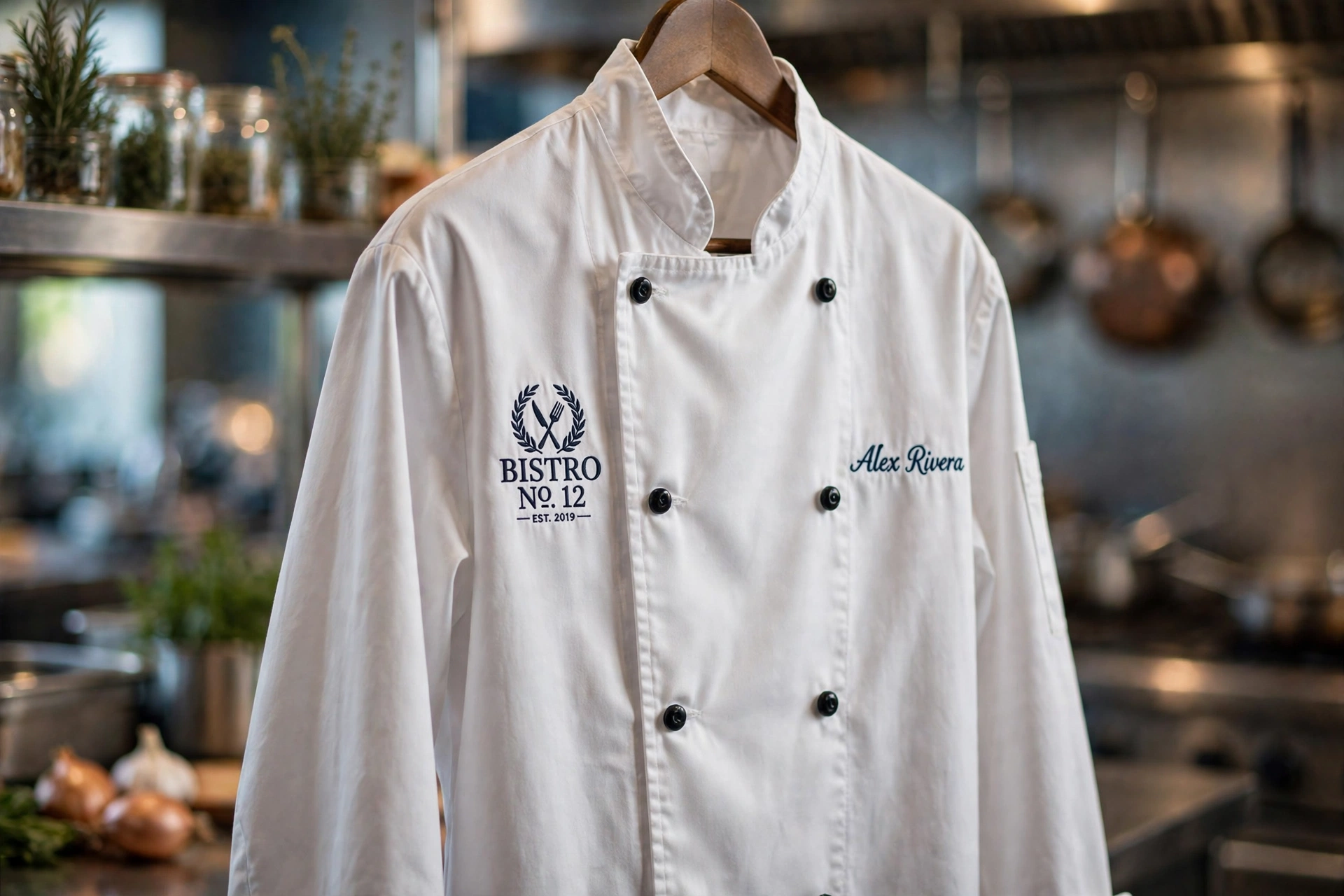
Chef Coat Embroidery: Names, Titles, and Placement
The chef coat is the most traditional embroidered garment in the building, and it follows conventions guests subconsciously recognize:
- Name on the left chest (wearer’s left), usually in a clean script or block font, roughly 3.5 to 4 inches wide
- Title under the name — Executive Chef, Sous Chef, Pastry Chef — in smaller lettering beneath
- Restaurant logo on the right chest or on the sleeve, balancing the name
- Flag or culinary-school patches sometimes appear on the sleeve
Thread color on a white coat is classically black, navy, or the house brand color. On black chef coats — increasingly popular in open kitchens — white, silver-grey, or metallic-look thread reads best. Names must be sized generously: kitchen staff are read at a distance across a pass, and tiny elegant lettering disappears. If your logo will also appear small on the coat, our left chest logo size and placement guide covers the exact measurements that work.
Apron Embroidery: The Hardest-Working Logo in the Room
Aprons take the worst of restaurant life — splashes, wipes, heat, and daily washing — and they carry the most visible logo, front and center. Standard placement is the upper chest of the bib apron, centered, or over the pocket area on waist aprons.
Digitizing for aprons has two specific demands. First, apron fabrics range from heavy canvas and denim to thin poly-cotton; the file needs density matched to the material so the logo neither puckers the light fabrics nor sinks into the heavy ones. Second, aprons are washed constantly and often with bleach or industrial detergents, so design choices matter: solid shapes and bold lettering survive; fine detail and tiny taglines wash into fuzz within months. Simplify the logo for the apron version — the full-color detailed logo can live on menus, while the apron gets the strong, simple mark.
Staff Shirts and Front-of-House Uniforms
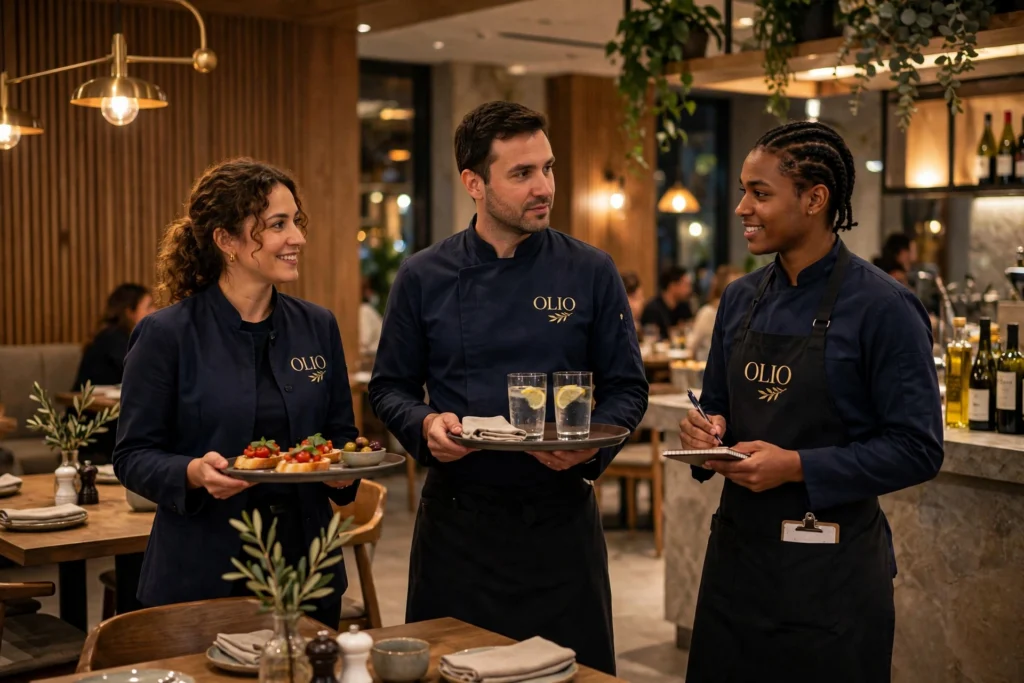
Servers, hosts, bartenders, and managers usually wear polos or button-downs with a left-chest logo. The rules here are the standard uniform rules: consistent size (typically 3.5 to 4 inches wide), consistent placement, and a thread palette locked to brand colors. Managers sometimes get a name added under the logo to distinguish them from the team — a small detail that helps guests know who to approach.
For polo shirts specifically, remember the fabric is a stretchy piqué knit. Embroidery files for polos need proper underlay and cutaway stabilizer at the machine, or the logo distorts. The digitizing has to anticipate the knit — if your current shirts show wavy logos, the file, not the shirt, is usually the problem.
Surviving Heat, Grease, and Industrial Washing
Restaurant embroidery fails in predictable ways, all preventable:
- Thread choice: polyester embroidery thread resists bleach, chlorine, and fading far better than rayon. For anything that will be industrially laundered, polyester is the professional default.
- Density: logos sewn too light show gaps after repeated washing as the fabric relaxes; too dense and the patch becomes stiff and cracks. Correct density is a digitizing decision.
- Colors on dark uniforms: light thread on black or navy uniforms is high-contrast and hides splashes better than the reverse — one reason dark uniforms dominate modern kitchens. When digitizing for dark garments, edges need extra pull compensation because light stitches on dark fabric reveal every gap.
- Design simplification: grease and washing blur fine lines first. Bold shapes age gracefully.
Franchise and Multi-Location Consistency
Nothing undermines a restaurant brand like five locations wearing five slightly different logos — different sizes, different colors, different placements. The fix is a single master digitized file and a written standard: one file, one size, one thread chart, one placement spec, used by every location and every embroiderer. Because digitizing is a one-time cost per design, a group can standardize once and reorder forever. The same applies to seasonal or LTO uniforms: digitize once, deploy everywhere. Our logo digitizing process and cost guide explains how a master logo file is built.
Bulk Orders: How Restaurants Should Plan
Restaurants rarely order one shirt. Plan embroidery at the uniform-program level: count staff per role, add spares for turnover (hospitality turnover is high — new hires need uniforms in days, not weeks), and keep the digitized file on record so any local embroiderer can produce identical work on demand. Ordering digitizing separately from sewing gives you that freedom: you own the file, any shop can sew it, and no single vendor holds your brand hostage.
Frequently Asked Questions About Restaurant Embroidery
Where does the name go on a chef coat?
On the wearer’s left chest, with the title beneath it. The restaurant logo usually balances it on the right chest or sleeve.
What thread is best for restaurant uniforms?
Polyester embroidery thread. It withstands bleach, hot washing, and fading far better than rayon, which matters when garments are laundered daily.
Why does our apron logo look faded after a few months?
Usually density set too light, rayon thread breaking down under industrial detergent, or a design with fine detail that blurs with washing. A file digitized for aprons — bold shapes, correct density, polyester thread — holds up far longer.
How do franchises keep embroidery identical across locations?
One master digitized file plus a written standard for size, thread colors, and placement, shared with every location. Digitizing is a one-time cost, so standardization is cheap.
Can the same logo file be used on chef coats, aprons, and polos?
The artwork stays the same, but each fabric class deserves its own version of the file — density and underlay differ between a stiff coat, heavy apron canvas, and stretchy polo knit. A good digitizer produces the set.
Get Your Restaurant’s Uniform Files Digitized From $10
One master file, sewn anywhere, identical everywhere — that is how professional restaurant groups keep their teams looking sharp. Order our embroidery digitizing service from just $10 at ndigitizing.com. Every order is 100% manually digitized for your fabric, delivered within 4 to 12 hours, with free revisions until it sews perfectly — and the file is yours to keep for every future hire.