Uniform Embroidery Digitizing for Workwear & Staff Uniforms
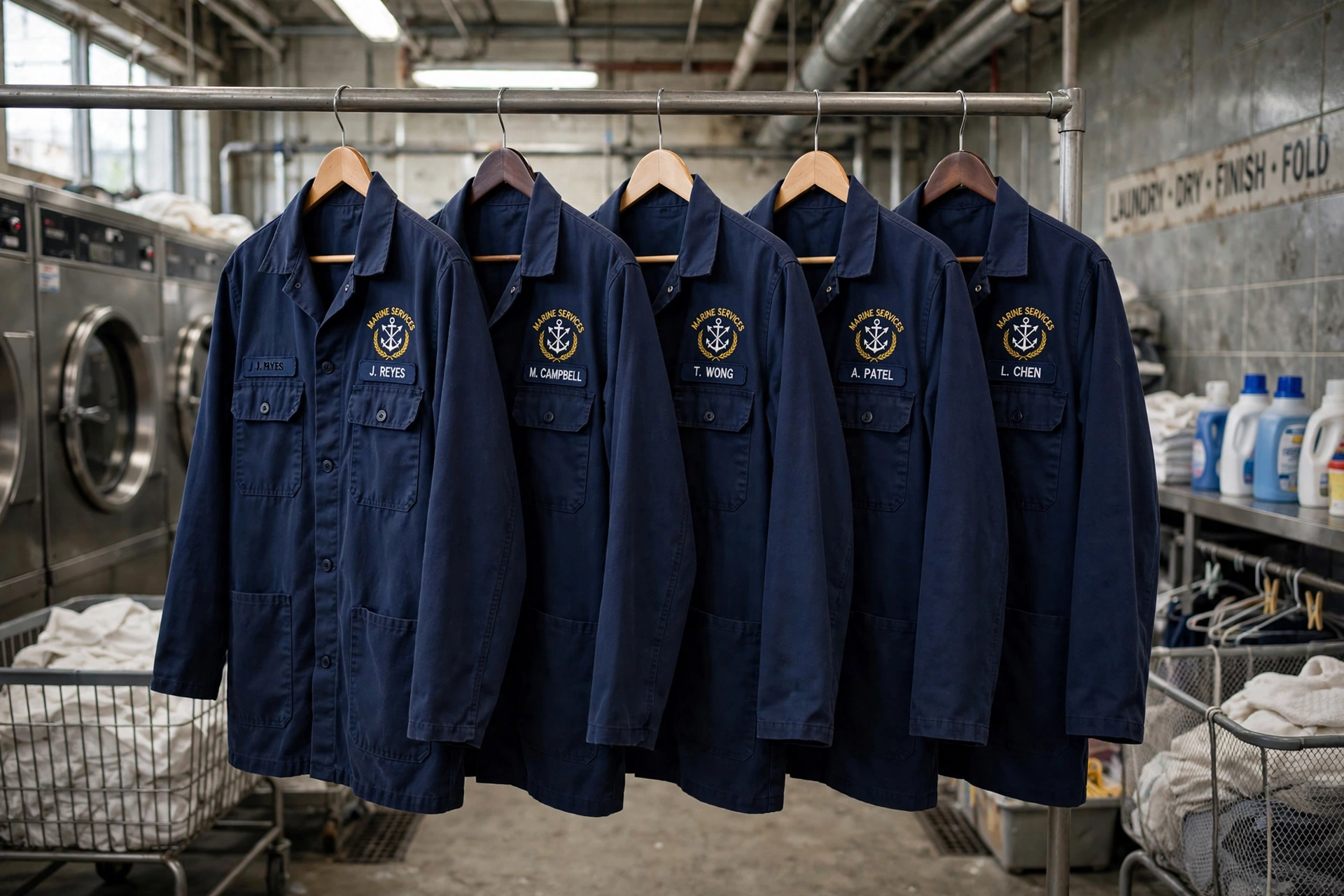
An embroidered uniform does three jobs at once: it identifies your staff, advertises your business, and has to survive being washed over and over without fading, fraying, or peeling the way print does. That is why embroidery is the standard for workwear — and why the digitizing behind it matters more than most buyers realize. A weak file looks fine on day one and ragged by the twentieth wash.
This guide covers uniform logo and name placement, the classic left-chest-plus-name combination, durability for industrial washing, how bulk orders work, which industries use uniform embroidery most, and what it costs.
The Classic Combination: Left Chest Logo + Name
The most ordered uniform layout in the world is simple:
- Company logo on the left chest — worn over the heart, the standard position customers look at first.
- Staff name on the right chest — usually in a clean, readable font, sometimes with a job title underneath.
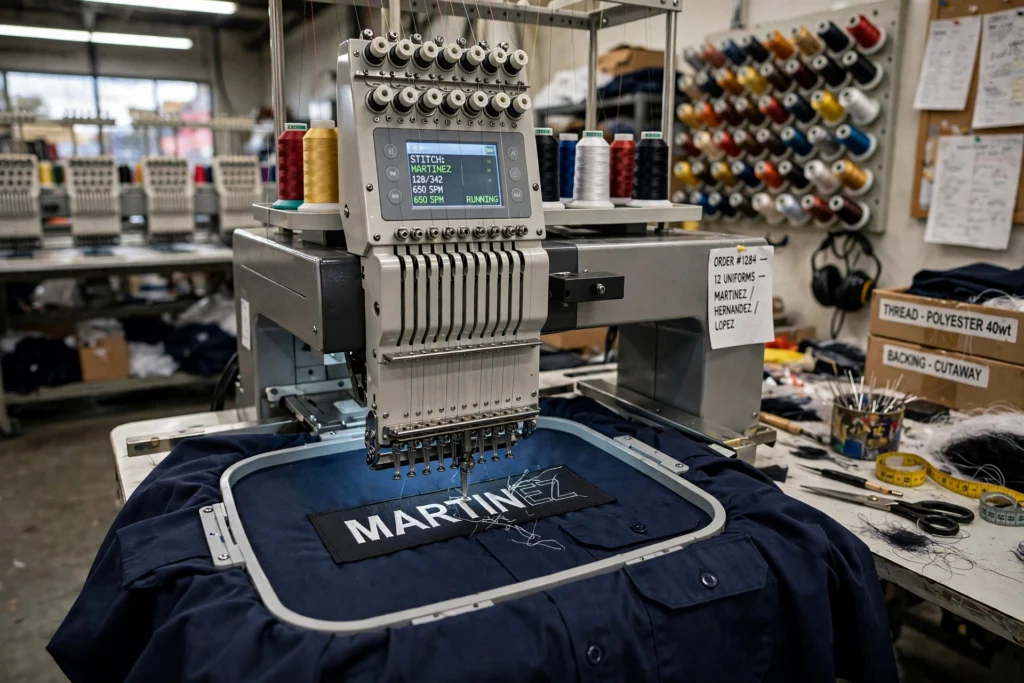
This pairing works on polo shirts, button-down work shirts, jackets, aprons, and scrubs. The logo is one digitized file used for every employee; each name is its own small file (or a lettering setup), which is why name embroidery is priced and ordered differently from the logo itself. For exact sizing and placement measurements for chest logos, see our dedicated left chest logo size and placement guide.
Other common placements:
- Sleeve: a small logo, flag, or certification mark — good secondary branding.
- Back: large company name or logo across the shoulders for staff who face away from customers (delivery, warehouse, events).
- Caps: a simplified version of the logo — caps need their own file at cap size; see how logo files are prepared in our logo digitizing guide.
Placement Standards That Keep a Team Looking Uniform
Consistency is the whole point of a uniform. Standard practice:
- Left chest logo: typically 3.5″ to 4″ wide, positioned so it sits level and centered on the chest panel — the same position on every garment, every size.
- Names: lettering around 0.5″ to 0.75″ tall for adult garments, in a font chosen for readability at a distance.
- One master file: every location uses the same master digitized file for the logo, so shirt 1 and shirt 500 match exactly. If different garment types need different sizes (polos vs jackets), the digitizer prepares size versions from the same master artwork.
When you order, tell the digitizer the garment types and sizes in the run. A logo file built for a polo’s chest may need a separate, larger version for jacket backs — planning that upfront is cheaper than fixing it mid-order.
Durability: Digitizing for Industrial Washing
Workwear gets washed hard and often — hospitality, healthcare, food service, and industrial uniforms may be laundered commercially at high temperatures. Embroidery survives this far better than print, but only if the file is built for it:
- Proper underlay and density. Stitches must be locked into the fabric so edges do not fray or lift after repeated washing. Skimped density looks thin within months.
- No fragile details. Tiny text and hairline elements are the first to break down. Uniform logos should be digitized in their simplified, bold form.
- Satin edges that hold. Clean, adequately wide satin borders resist abrasion from washing and daily wear.
- Garment-matched settings. A file for a sturdy twill work shirt differs from one for a pique polo or a fleece. Tell your digitizer the actual garments — one file per fabric family is normal for uniform programs.
Polyester thread (the industry standard for workwear) resists bleach and harsh detergents better than rayon — a sewing-side choice, but worth knowing when you brief your embroiderer.
Bulk and Repeat Orders: One File, Many Garments
Here is the economics that make uniform embroidery attractive: you pay for digitizing once. The same logo file sews onto 10 shirts or 10,000 — reorders for new staff need no new digitizing at all, just the file you already own.
Practical bulk tips:
- Order all size/fabric versions upfront (polo, shirt, jacket, cap) so every garment matches from day one.
- Keep your files. A professional service delivers files in your machine formats (DST, PES, EXP, JEF and others). Store the master copies — they are your uniform program’s most reusable asset.
- Names are the only per-person cost. Each new employee’s name is a small new file or lettering job; the logo never changes.
- Revisions matter. If the first sew-out shows the logo slightly too dense for your polo fabric, free revisions (included with every ndigitizing.com order) let you correct the master file before the full run — not after 200 shirts.
Industries That Rely on Uniform Embroidery
- Hospitality: hotels, restaurants, cafes — chest logos, names, aprons.
- Healthcare: scrubs with names and departments, lab coats.
- Trades and construction: work shirts and hi-vis with company logos (note: embroidery on hi-vis must not compromise the garment’s safety design — placement is planned around reflective bands).
- Retail and salons: branded polos and aprons.
- Corporate and offices: logo shirts for events, client-facing teams.
- Security, delivery, and logistics: back logos for visibility and identification.
What Does Uniform Embroidery Digitizing Cost?
The logo file is a one-time cost: standard chest logos start from $10, with price based on size and complexity — a jacket-back version or a highly detailed crest costs more than a simple chest wordmark. Name files are small and inexpensive by comparison. Because the file is reused across every garment and every reorder, the per-uniform digitizing cost quickly drops to almost nothing. Turnaround is 4 to 12 hours per design, so even a full uniform program’s files can be ready before the garments arrive.
Frequently Asked Questions About Uniform Embroidery
What is the standard placement for a uniform logo?
Left chest, typically 3.5″ to 4″ wide, with the staff name on the right chest. Back and sleeve placements are common additions.
Do I need a new file for every employee?
No. The logo is digitized once and reused for everyone. Only the name is individual — each name is a small separate file or lettering setup.
Will embroidery survive industrial washing?
Yes — embroidery is chosen for workwear precisely because it outlasts print. The file needs proper density and underlay, and fragile fine details should be simplified, so edges stay clean wash after wash.
Can the same logo file be used on shirts, jackets, and caps?
The same artwork, yes — but usually as size/prepared versions. Caps need a smaller cap-specific file, and jacket backs a larger one. A good digitizer prepares the family of files from one master.
How much does uniform logo digitizing cost?
From $10 per design at ndigitizing.com — a one-time cost, delivered in 4 to 12 hours with free revisions, and reusable on unlimited garments and reorders.
Digitize Your Uniform Logo Once — Use It Forever, From $10
A uniform program runs on one great master file: correct on every garment, tough enough for industrial washing, ready for every new hire. Order our embroidery digitizing service from just $10 per design. Every order is 100% manually digitized, delivered in your machine’s format within 4 to 12 hours, with free revisions until it sews perfectly.