
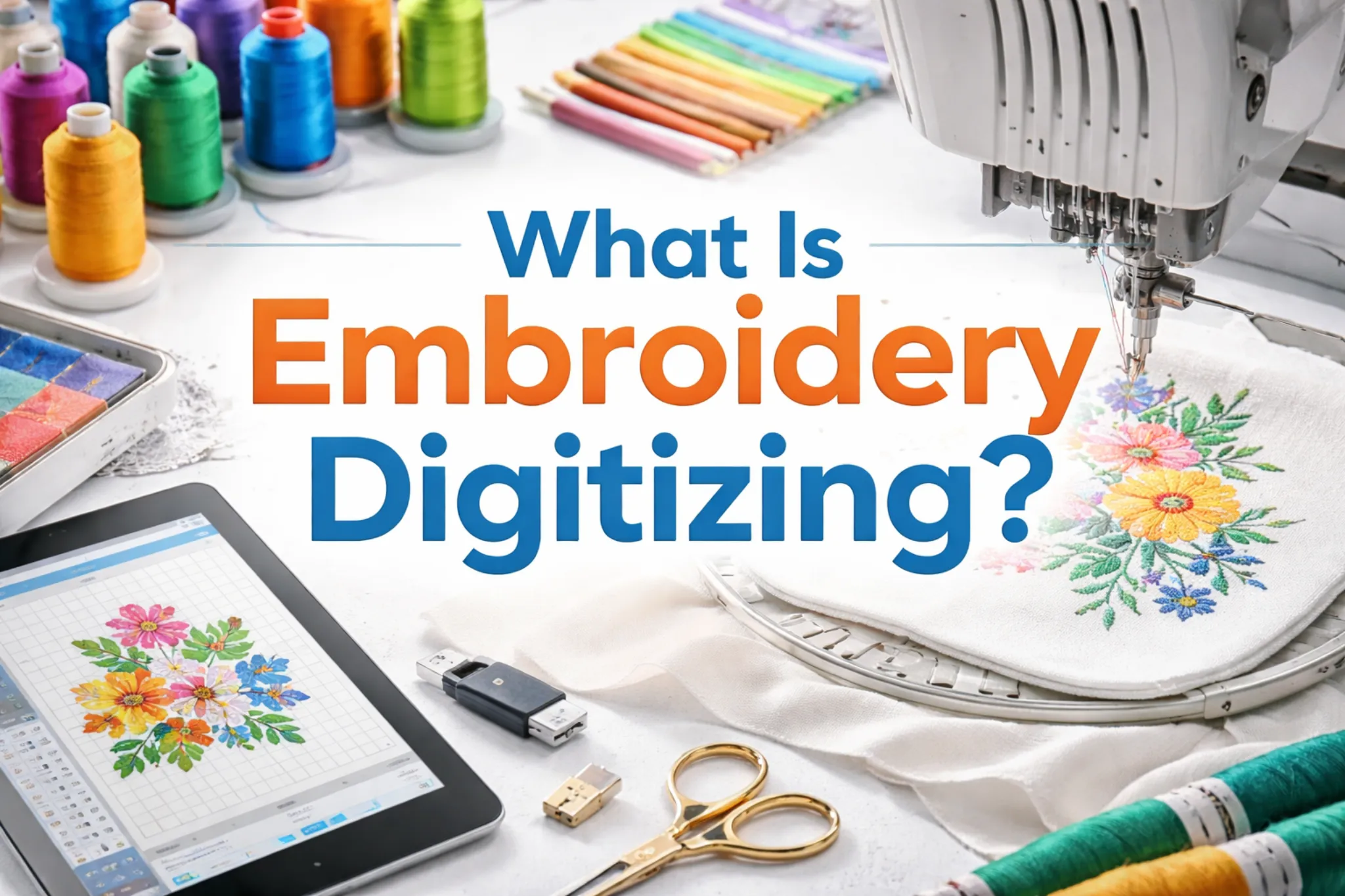
Embroidery digitizing is the professional process of converting artwork, logos, or text into a digital embroidery file that embroidery machines can accurately read and stitch onto fabric. Unlike simple image conversion, embroidery digitizing requires technical expertise, textile knowledge, and an understanding of stitch behavior, fabric types, and machine limitations.
In today’s competitive European market-where quality, consistency, and craftsmanship matter-embroidery digitizing plays a critical role in branding, fashion, corporate identity, and custom textile production. From luxury apparel brands in Italy to corporate uniforms in Germany and hospitality textiles across France and Spain, digitizing ensures every stitch reflects precision and professionalism.
This guide explains embroidery digitizing in detail, how it works, where it is used, and why expert digitizing services such as NDigitizing.com are trusted by businesses seeking reliable, high-quality embroidery results.
Understanding Embroidery Digitizing Beyond Basic Design
Many people confuse embroidery digitizing with graphic design. In reality, they are fundamentally different disciplines.
Graphic design focuses on visual appearance, while embroidery digitizing focuses on how a needle, thread, and fabric interact in real-world conditions. A well-digitized design considers stitch direction, stitch density, pull compensation, thread breaks, and fabric distortion.
Key Difference Between Printing and Embroidery
| Aspect | Printing | Embroidery |
|---|---|---|
| Surface | Flat ink layer | Raised stitched texture |
| Durability | May fade over time | Long-lasting and premium |
| Fabric interaction | Minimal | High (stretch, pull, thickness) |
| Skill requirement | Graphic-focused | Technical textile expertise |
This is why professional embroidery digitizing cannot be automated reliably without human expertise.
How Embroidery Digitizing Works: Step-by-Step Process
1. Artwork Analysis
The digitizer first reviews the logo or design to assess complexity, size, colour transitions, and stitch feasibility. Small details that look fine on screen may not stitch well and must be adapted.
2. Fabric & End-Use Evaluation
Different fabrics behave differently. Cotton, polyester, denim, leather, caps, towels, and knitwear all require unique digitizing approaches.
3. Stitch Type Selection
Common stitch types include:
- Satin stitches (for borders and text)
- Fill stitches (for large areas)
- Running stitches (for fine details)
Each stitch is chosen based on durability, appearance, and fabric behaviour.
4. Stitch Direction & Density Control
Proper stitch direction enhances visual depth and prevents fabric distortion. Density is carefully balanced to avoid puckering or thread breaks.
5. Underlay Stitching
Underlay stitches act as a foundation, stabilising fabric and improving final stitch quality-especially important for premium garments.
6. File Formatting
The final design is saved in machine-specific formats such as DST, EXP, PES, or VP3, ensuring compatibility with industrial embroidery machines used across Europe.
Professional Embroidery Digitizing File Formats
| File Format | Common Usage |
|---|---|
| DST | Industrial embroidery machines |
| PES | Home and commercial machines |
| EXP | High-speed commercial systems |
| VP3 | Advanced embroidery machines |
Choosing the correct format is essential for flawless machine performance and consistent output.
Expert Facts About Embroidery Digitizing
- High-quality digitizing can increase embroidery durability by over 40% compared to poorly digitized designs.
- Incorrect stitch density is the leading cause of fabric puckering, especially on lightweight European fashion fabrics.
- Professional digitizing reduces machine downtime, saving production costs for manufacturers.
- Cap embroidery requires specialised digitizing, as flat designs cannot stitch properly on curved surfaces.
- Thread path optimisation can reduce thread breaks by up to 30%.
- Luxury brands prioritise stitch direction consistency to maintain brand uniformity across collections.
- Digitizing is a technical skill, not a software feature-software only assists skilled digitizers.
Why Embroidery Digitizing Is Essential for European Businesses
European markets are quality-driven rather than volume-driven. Customers expect precision, durability, and refined aesthetics. Embroidery digitizing ensures:
- Brand logos remain consistent across garments
- Corporate uniforms maintain professional appearance
- Luxury textiles meet premium standards
- Production waste is minimised
- Long-term cost efficiency
In industries where reputation matters, embroidery quality directly reflects brand credibility.
Common Use Cases of Embroidery Digitizing
Corporate Branding
Uniforms, workwear, and promotional apparel require consistent branding across locations and suppliers.
Fashion & Apparel
Designers use digitizing for jackets, denim, knitwear, and high-end embroidery detailing.
Hospitality & Healthcare
Hotels, restaurants, and healthcare institutions rely on embroidery for durability and professional presentation.
Sports & Teamwear
Logos must withstand frequent washing and physical use.
Promotional Products
Caps, bags, towels, and accessories demand precision digitizing for curved or textured surfaces.
Embroidery Digitizing vs Auto-Digitizing Software
| Aspect | Auto-Digitizing | Professional Digitizing |
|---|---|---|
| Accuracy | Low | High |
| Fabric adaptability | Poor | Excellent |
| Stitch optimisation | Minimal | Advanced |
| Brand consistency | Unreliable | Guaranteed |
| Long-term cost | High due to errors | Cost-efficient |
Auto-digitizing tools may appear convenient but often result in poor embroidery quality, machine issues, and rework costs.
The Role of Experience in Embroidery Digitizing (E-E-A-T)
Google’s E-E-A-T framework values Experience, Expertise, Authoritativeness, and Trustworthiness. Embroidery digitizing strongly aligns with this principle because:
- Experience determines stitch optimisation
- Expertise prevents costly production errors
- Authoritative digitizers understand industry standards
- Trust ensures repeatable quality across projects
Professional platforms like NDigitizing.com apply years of hands-on embroidery knowledge rather than relying solely on automation, making them a dependable choice for European businesses seeking consistent results.
Quality Factors That Define Professional Digitizing
Stitch Balance
Proper stitch length and spacing maintain fabric integrity.
Pull Compensation
Adjustments account for fabric stretch during stitching.
Clean Pathing
Efficient stitch paths reduce thread trims and machine wear.
Scalability
Designs remain clean whether stitched small or large.
Why Businesses Choose Professional Digitizing Services
Rather than hiring in-house digitizers, many European brands prefer specialised services to ensure accuracy, scalability, and cost control.
Trusted providers such as NDigitizing.com focus on:
- Precision-driven digitizing
- Compatibility with European production standards
- Reliable turnaround without compromising quality
- Consistent output across multiple orders
This approach supports long-term brand consistency without operational complexity.
Embroidery Digitizing and Sustainability
Sustainability is a growing priority in Europe. Professional digitizing contributes by:
- Reducing thread waste
- Minimising fabric rejection
- Extending garment lifespan
- Supporting responsible production practices
Efficient digitizing directly aligns with sustainable manufacturing goals.
Common Mistakes to Avoid in Embroidery Digitizing
- Using print-ready artwork without embroidery adaptation
- Ignoring fabric type during digitizing
- Over-densifying stitches
- Poor underlay selection
- Using incorrect file formats
Avoiding these mistakes requires professional knowledge, not just software access.
Future of Embroidery Digitizing in Europe
As automation increases, human-guided digitizing remains irreplaceable for premium embroidery. Future trends include:
- AI-assisted (not AI-controlled) digitizing
- Increased demand for sustainable embroidery
- Greater focus on luxury textile detailing
- Customisation at scale
Professional digitizing services will continue to play a vital role in maintaining craftsmanship standards.
Final Thoughts
Embroidery digitizing is the foundation of high-quality machine embroidery. It combines technical precision, textile understanding, and real-world embroidery experience to transform designs into durable stitched products.
For European businesses operating in quality-driven markets, professional digitizing is not optional-it is essential. Whether for corporate branding, fashion, hospitality, or promotional textiles, expert digitizing ensures consistency, durability, and premium presentation.
Platforms like NDigitizing.com represent the modern standard of embroidery digitizing-focused on expertise, reliability, and long-term value rather than shortcuts. By investing in professional digitizing, businesses protect their brand identity and elevate the quality of every embroidered product.